Friday, November 15, 2019

Something Scary - What makes real horror?


What is horror is a question with which I often struggle. Growing up, I never watched a lot of horror movies, mostly because my parents were smart and didn't allow me to do so. As I got older, I started looking into some of the classics and began to build up an appreciation for the genre. Eventually, I discovered that there was more to horror than I had ever believed. Within this section of storytelling, I found stories of humanity, tragedy, and the fragility of our own consciousness. Yet, when I look around at the horror landscape, especially in recent years, I seldom if ever see a whole lot of movies that reflect the better qualities of the genre. What's more, at least in my opinion, it's giving genuine horror a bad name. 

Like any other genre of film or literature, there are many different branches commonly known as sub-genres. Stories that fall into not only a specific category but also a particular segment of said category. Example: a drama that happens to focus on the romantic exploits of the main characters is described as a "romantic drama" or "dramatic romance." A comedy that happens to follow two dueling police officers is characterized as "buddy-cop comedy." Horror is no stranger to sub-genres ranging from the fantastical and supernatural to the uber-realistic and gritty. These days, horror cinema is mostly associated (unfairly in my opinion) with gore, horrific violence, and cheap jump scares that do nothing but hurt your ears and annoy you to the point of aggravation. Speaking personally, I appreciate and enjoy horror when it's in the most creative and sophisticated way possible. Because anyone can don a cheap costume, cover it in fake blood, and scream "BOO" to an audience, but it takes genuine effort and talent to create something tense yet fascinating. So, allow me to share my feelings on what makes real horror. 


In my opinion, genuine horror can best be described in a single word, uncertainty. To me, real fear does not come from how much blood you can splatter all over the screen, or how many monsters you can fit inside the frame, and especially not how many times you can jumpscare the audience before they find it obnoxiously dull. It comes from how effectively the story can make the audience question what they just witnessed. Horror is one of the few genres where ambiguity is key to a successful presentation, especially when you consider how much most screenwriters and Hollywood producers don't like the very idea of uncertainty. Many mainstream and big-budget horror films and shows fail miserably not because they're gross and lazy, although that is a big part of it, it's because they're too cowardly to take risks with leaving unanswered aspects of the story. Sure, specific sub-genres of horror films like slasher killers and vampires don't require any ambiguity, but that's because they are not real horror movies, at least not to me. Instead, they are, as the term "sub-genre" should imply, rogue splinter cells of the genuine article. They're not horror but share enough similarities to the genre that they often come off as such. While you can make the argument that this explanation can apply to just about any other style of fiction, in my opinion, horror is the one that seems to have suffered the most from this lack of distinction. 


Perhaps one of the best examples for my position on horror is the film Oculus by Mike Flanagan. Released in 2014, the story revolves around an elegant, and supposedly haunted, antique mirror. Legend claims that those who have possessed the mirror have fallen victim to madness prompting acts of violence upon others and themselves. In the story proper, we follow two siblings whos partners were the last owners of the mirror. One of them is determined to prove that the mirror is evil and has been the cause of their personal tragedy, while the other remains skeptical, offering perfectly logical explanations for any mysterious circumstances associated with the mirror. Throughout the entire film, every single possibility is explored and examined, but never fully clarified. Meaning every single action on screen could be attributed to someone's unbalanced mental state or a supernatural entity. Both conclusions are possible yet inadmissible all at once. Thereby creating an experience that causes you to question the events depicted on screen continually. In other words, ambiguity in action. 
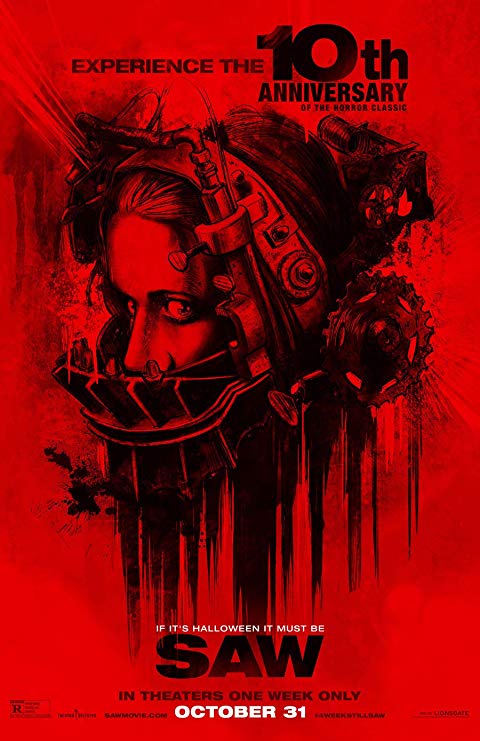

In comparison, take a look at the film Saw — specifically the first one and none of the sequels (we'll get to those later). For the record, I find the first film to be okay. It succeeds in being a character-driven thriller and provides a unique take (to put it mildly) on the human condition. Most notably, the dangers of self-destruction and the importance of embracing life. Now, with that said, I am not a fan of the series as a whole, nor do I consider this franchise to be a real horror story. Because even though the first movie at least tried to delve deeper into a more psychological and emotional narrative, it's still trashy blood & guts exploitation unable to escape itself. In all fairness, the first film was better purely because of how much it didn't show but rather implied, which in-and-of-itself is commendable, but that gets immediately overshadowed when you realize that all of the sequels that followed flat out abandoned all of that in favor of standard torture porn. Leaving the audience with no genuine impact other than how gross it all was. Each and every sequel was only interested in upping the ante with more gore and less character, not to mention coming up with more elaborate ways to mutilate the human body. Needless to say, this isn't horror. 

This comparison best describes the real distinction which has gone overlooked for far too long. That of horror vs. shock value. Both Oculus and Saw are categorized as "horror," but I argue that only one of them actually is such while the other is a shlocky shock & gorefest. Guess which one it is? 

You see, there's a reason why movies like Saw and its sequels, as well as any other film of the same bloody nature, dominate the horror landscape when they shouldn't, they're easy to sell. Films that challenge the mind and take the time to build atmosphere and narrative intrigue are difficult to pitch to a producer, but elaborate blood & guts movies easily marketed to teenagers sell like Hotcakes. For the most part, studios these days are terrified (ironically) to produce films only intended for adults, unless it's designed for Oscar bait. As a result, most of what tries to pass as horror these days are just jumpscare riddled haunted mansion roller coaster simulators meant to yank as much money out of teenagers with too much disposable income as possible. Meanwhile, the actual horror films with compelling narratives and genuine talent behind them are left in the dust for no adequate reason, other than the teenagers whining about the lack of monsters and/or gore. If you need an example, look no further than this movie. 


The Babadook is one of my favorite horror films of all time. Because it is the perfect embodiment of what makes the genre so universal and intriguing to me. The story follows a widowed mother trying to take care of her young son while dealing with the trauma of her husband's death. One night while in her sleep-deprived state, she reads a mysterious pop-up book to her son called The Babadook, the story of a strange creature that lives in your mind. As the film progresses, it becomes clear that The Babadook is the manifestation of trauma and the anger & fear that can stem from it. The visuals and plot points throughout the film serve as a metaphorical event in which the mother comes to terms with her loss and finds the strength to move on. The Babadook is a prime example of horror filmmaking as it showcases the power of metaphorical storytelling and how to best utilize physical embodiments of internal struggles. Despite becoming one of the most successful and beloved horror films in recent memory, many people who initially saw it became incredibly disappointed. Criticizing it for not having any actual monsters and coming off as a major letdown. Needless to say, they all completely missed the point of the film. 

The best horror films, at least to me, are the ones that explore human nature, especially its flaws. Films like Oculus and The Babadook forces us to question our reality and take a deep dive into our own inner self. They challenge us to embrace the parts of ourselves we find too terrifying to even acknowledge. Because by embracing the parts of ourselves we overlook, we can better discover and embody our true selves. Real horror films encourage you to face your own fears in one way or another. This is the real power of horror. This is what I look for in this particular genre, and why I believe it must be rescued from misconception. 

If you're interested in other perspectives on horror, check out these videos from the online show Extra Credits. The show that examines and comments on video games and how they impact people. 


I hope you found this examination of horror intriguing. Be you a veteran fan of the genre, or a casual admirer, or someone who doesn't understand what all the fuss is about, I hope this has enriched your perception on the subject in some way. 

Ladies & gentelmen, I am TheNorm, thank you all for reading. 

Tuesday, November 12, 2019

Doctor Sleep - Shine On


In 1977, renowned horror writer Stephen King published a book titled The Shining. The story of a small family taking on a job as the winter caretakers of an elegant and prestigious Mountain resort known as The Overlook Hotel. Which, as it turns out, also happens to be haunted. Further exacerbated by the fact that the family's young son, Danny, possesses strange psychic abilities (which he refers to as Shining), which allows him to observe and communicate with otherworld beings such as ghosts. Three years later, renowned filmmaker Stanly Kubrick released a film adaptation of the book starring Jack Nicholson and Shelly Duvall. Despite becoming one of the most acclaimed horror films over the years, Stephen King has continuously expressed his disdain for the film. Mainly due to the massive changes made to the main characters as well as specific plot points. Stephen King would go on to produce a three-hour television special of The Shining, which was more faithful to his book but significantly less entertaining. Then, in 2013, King published a sequel to the book titled Doctor Sleep. The story of Danny Torrance now grown up and dealing with the trauma he suffered at The Overlook. Now, six years later, a new and influential voice in horror filmmaking, Mike Flanagan, has presented audiences with a film adaptation of King's book, framed simultaneously as an adaptation of the novel and a sequel to Kubrick's masterpiece, and he's hit it right out of the park. Not only is this arguably the best possible sequel to The Shining we ever could have asked for, but it's also just a fantastic film in its own right. If this doesn't cement Mike Flanagan as the new King of Horror Cinema, I don't know what will. 

The story follows Danny Torrance (Ewan McGregor) as an adult dealing with a wide variety of issues. He's inherited his father's drinking problem and has been unable to properly cope with his past trauma. Not to mention, his Shining powers (his psychic ability to talk to ghosts and read minds) are occasionally hitting him over the head too hard. Things begin to turn around for Danny as he eventually finds himself a new friend named Billy (Cliff Curtis), who gives Danny a place to stay, enrolls him into an AA (Alcoholics Anonymous) program, and gets him a job as a hospice worker. Where, given his unusual talent for comforting the ones who are about to die, earns him the nickname Doctor Sleep. All is getting better. That is until Danny starts communicating with a young girl named Abra (Kyliegh Curran) who possesses Shining powers way more potent than his own. Making things even more complicated is the discovery of a group of what can only be described as Shining Vampires, lead by a mysterious woman named Rose the Hat (Rebecca Ferguson), who achieves near-immortality by eating the souls of those who Shine, especially children. Having just witnessed the gang commit their horrible deeds, Abra emplores Danny to help her stop them. Now, Danny must confront his past, in more ways than one, to save his friend and take down the monsters.  

What makes this such a great and entertaining film, at least to me, is how intelligent it is. None of the characters ever act recklessly or stupid for the sake of a scare or for advancing the plot. All the characters, especially Abra, are remarkably bright, which makes them feel more three dimensional and robust. All of which is commented well by the script which, without spoiling anything, succeeds in presenting a compelling narrative, utilizes each and every character's strengths & weaknesses and uses nostalgia in a way that doesn't feel contrived or forced. In this day in age, that's nothing short of miraculous. 

Director Mike Flanagan, who previously worked on Oculus and Netflix's The Haunting of Hill House (both of which are equally excellent and I highly recommend), clearly shows that he has a great deal of respect and admiration for both the works of Stephen King and Stanly Kubrick. In addition to employing his natural ability to create a genuinely creepy atmosphere and suspenseful tension, Flanagan took on the challenge of crafting a film that would both compensate for Stephen King's issues with Kubrick's film and honor what makes that very same movie so memorable. Needless to say, Flanagan succeeded with flying colors. What's more, he did so in a way while still making the film feel like his own. It's a near-perfect collaboration and understanding of artists spanning generations that could not have had a better outcome. 

The acting is superb. Kyliegh Curran especially, at age thirteen no less, delivers a performance on-par with the likes of some of the greats such as Meryl Streep. She showcases such a wide variety of emotions and characteristics and maintains so much conviction throughout that she could quickly put some of the more seasoned veterans she shares the screen with to shame. Her chemistry with Ewan McGregor makes her shine even more. Without a doubt, this young lady is unquestionably worthy of the MVP award for this film. 

Doctor Sleep is, quite possibly, the absolute best sequel to The Shining we ever could have asked for. Usually, having Stephen King's blessing on a film adaptation of his work isn't necessarily a clue of excellent quality, but in this case, it most certainly is. Even though there may be times when the movie feels just a little bit too long, it never really drags. The only real nitpick I have with this one is that they didn't think to release it right on Halloween.

I look forward to buying my copy of this film when it is released on disc. 

Is this movie worth seeing? 
Yes. 

Is it worth seeing in Theaters? 
Yes. 

Why? 
It's a brilliant film that has earned its place high on the mantle of the most tremendous psychological/supernatural horror thrillers ever made, especially The Shining. A worthy sequel to a memorable story. Please don't miss this one. 

Ladies & gentlemen, I am TheNorm, thank you all for reading. 

Monday, November 11, 2019

Harriet - Pretty good


The story of Harriet Tubman is one that has been long overdue for a feature film. Apparently, Disney had the rights to this script, but for some reason, they refused to produce it. It wasn't until after they lost the rights to it that it finally got made. It's funny to think that a studio which has been making bank on Superhero films would not be interested in creating a movie about one of history's greatest real-life heroes. Regardless, thanks to the folks at Focus Features, the script has finally seen the light of day. And if you ask me, Disney really missed a golden opportunity with this one. 

The film chronicles the early exploits of Harriet Tubman (Cynthia Erivo) as an escaped slave who makes her way North to freedom. Soon after, she decides to go back to rescue her husband only to find herself taking a few others along with her. After successfully escorting a handful of slaves to freedom, Harriet became one of the most decorated conductors for the Underground Railroad. She would go on to rescue over 800 slaves, lead a regiment of the Union Army during the Civil War, and became the first spy for the Union. She was, and remains, one of the greatest heroes in American history.

Her movie is, for the most part, pretty damn good. The acting is top-notch, the direction is fluid, and the cinematography is gorgeous. The script is where the film shines most, even though it can feel a little on-the-nose with how much it wants to portray Harriet as an actual superhero. According to history, Harriet suffered a head injury, which, apparently, gave her strange visions. The script chooses to emphasize this aspect of her by treating it as a legit superpower, allowing Harriet to foresee danger and determine the best course of action for most situations. It can come off as a little contrived, but in the modern age of superhero cinema, it makes sense to want to play up a possible superpower angle. While I personally didn't have a problem with it, as I actually liked the idea of a disability being used as an advantage in some capacity, I can understand how some audiences might find it to be a little far fetched. Even so, I thought it was well executed as it never felt utterly implausible.

Oddly enough, that's just about all I have to say about this film. There's wasn't anything about it I didn't like, and everything that is there is well presented. This may be one of those rare films that executes everything so well that you don't remember you're watching a movie. I would not go so far as to call it the highest achievement in cinema, but it does what it needs to do incredibly well.

Is this movie worth seeing?
Yes.

Is it worth seeing in Theaters?
Yes.

Why?
It pretty much does everything right. I almost feel bad for not having much else to say about it, but it is just really that good.

Ladies & gentlemen, I am TheNorm, thank you all for reading.

Saturday, November 2, 2019

Terminator: Dark Fate - Unnecessary but inoffensive...also pretty fun.


The first two Terminator films are some of the most excellent action/science fiction works ever created. The first movie, The Terminator, was a near-perfect amalgamation of film-noir, horror, action, and science fiction. All revolving around a story of courage, fate, war, and humanity as a whole. The next film, Terminator 2: Judgement Day, upped the ante with better action, a more in-depth story, more robust characters, and a profound commentary on what it means to be human and alive. There was no possible way any other movie in this franchise could ever even come close to elevating, let alone matching, the nearly flawless execution of James Cameron's masterpiece. Even so, when Skydance bought the rights to the franchise, they tried their damndest to do so, and boy did they fail miserably. 

In short, Terminator 3: Rise of the Machines was aggravating, Terminator: Salvation was frustrating, and Terminator: Genisys was absolutely insulting! 

Every single Terminator movie released after Judgement Day were poorly made, overly advertised, and failed to understand the heart of the franchise. Worst yet, it seemed as if there would be no end to the onslaught of terrible movies, and no one seemed to care. That is until James Cameron re-acquired the rights to the franchise, and decided to produce and co-write a brand new film. Also, it would completely ignore all of the other movies and take place after the events of Judgement Day. Despite this, I still had some severe trepidations about this new Terminator film. Having sat through three uneventful and heartless movies baring the Terminator name, I had damn near lost all hope for this franchise and its future. Even so, I still bought my ticket and waltzed into the theater with the lowest expectations possible. To my delightful surprise, I left the theater feeling better than before. Terminator: Dark Fate may very well be the swift kick in the butt that the franchise has needed for a long time. I would not go so far as to declare it the new best film of the series, but I will gladly label it as the only good Terminator movie post-Judgement Day. 

The story follows a young girl named Dani (Natalia Reyes) who is suddenly attacked by a stranger, who turns out to be a Terminator from the future sent to kill her. Lucky for her, she has an assigned protector named Grace (Mackenzie Davis), a human soldier also from the future, who has also been augmented with cybernetic enhancements. Granting her super-strength & speed, enhanced senses, and more durability than a Tank. While fighting off the killing machine, the two of them are confronted with a familiar face, Sarah Connor (Linda Hamilton), who has been hunting down other Terminators all her life. Together, she and Grace must protect Dani for the sake of the future. 

Now, if you've seen either of the first Terminator films, this will all sound incredibly familiar. The good news is, even though it's more-or-less the exact same plot, it's still a different story. I don't want to go into too many details here because I don't want to give any spoilers that were, thankfully, not given away in the film's trailers. What I will say about the writing of this movie is, while I still think it doesn't totally work in a few areas, I greatly appreciated the amount of effort and passion that clearly went into the script by all parties involved. It's like your Grandmothers famous Chocolate Cake only it's been baked by your best friend: it's made with the same ingredients, but even though it doesn't taste quite the same, it's still enjoyable because it was, at the very least, made by someone who cares. Perhaps I will go into more detail in a later blog post with spoilers, but for now, rest assured that this is the best writing one can realistically ask for in a Terminator film post-Judgement Day. 

Director Tim Miller, who previously worked on Deadpool, seems to have taken at least one critical note from James Cameron: the action is more enthralling when you care about the characters involved and the stakes are sincerely high. The characters in this movie are three-dimensional, sympathetic, bad-ass when required, and emotionally charged when needed. Which makes the action all the more entertaining. Further enhanced by the Terminator antagonist, who is, appropriately, unstoppable. Everything our heroes throw at the machine simply slows it down as they narrowly make their escape. When compared to the villains of the last film, Terminator: Genisys, in which the Terminators are quickly dispatched with a single gunshot followed by an unfunny quip, Terminator: Dark Fate is massively superior. Also, the actions scenes taken on their own merits are pretty damn awesome. 

The cinematography by Ken Seng is a bit of a mixed bag. The colors are washed out but not hugely, and the framing and camera movement is stable, but the lighting in a few scenes is just terrible. There are a few scenes shot in the dark, and it becomes too difficult to make out what's happening. It's nowhere near as bad as say Slender Man, but it does occasionally feel like they didn't bother to light the scene once in a while. While dark scenes can work, there still needs to be some kind of illumination going on. 

Terminator: Dark Fate is a better movie than it has any right to be. While I would personally like to see more Terminator films set during the future war rather than in the present day, as I believe there are more opportunities for new stories there, I am impressed enough with this new entry to see where it goes from here. It is not the best Terminator movie yet, despite what the advertising would have you believe, but it is significantly better than any other film post-Judgement Day. 

Is this movie worth seeing? 
Yes. 

Is it worth seeing in theaters? 
Yes. 

Why? 
It's a brand new Terminator film that has heart and is a good step forward for the future of the franchise. 

Ladies & gentlemen, I am TheNorm, thank you all for reading. 

Wednesday, October 30, 2019

Black and Blue - Intense and timely


"Be the change that you wish to see in the world." 
-Mahatma Gandhi 

Writing a review for Black and Blue is like walking through a Minefield: If you're not careful with where you step, you could end up causing severe damage to yourself or someone you care about. Because Black and Blue is an incredibly well-made film with an overdue and timely story about police corruption, racism, and toxic tribal mentality, all of which are unbelievably difficult for me to talk about (despite how much I really want to) because I am a white man. Because of the depressing and downright aggravating state of unrest in the present social and political climate, I ask if it is more appropriate for me to simply stand down and not say anything at all? To which I answer, no! Because while I do happen to be white, as well as a man, I am also, above all else, a human being. Who wants nothing more than to encourage others to take courage and do what is right, no matter how difficult, simply because. And I am happy to say that you can find that very same necessary inspiration in today's film, Black and Blue. Because, despite what others may say, you can indeed become the change you want to see. 

The story follows Officer Alicia West (Naomie Harris), a former soldier turned rookie cop patrolling the poverty-ridden (and predominantly black populated) streets of New Orleans. Police are trusted by no one, and citizens are regularly harassed by the police, but Officer West seeks to change that. She gets to an incredibly rocky start when she witnesses a corrupt undercover cop murder a set of drug dealers in cold blood. Having captured the event on her body-cam, Officer West must find her way back to the Police Station so she may turn in the evidence and take-down the criminals. Which is going to be easier said than done, because not only are all of the other crooked cops after her but the locals, some of whom work for a local crime boss named Darius (Mike Colter, yes, the guy who played Luke Cage), are under the impression that she committed the murders and are after the bounty on her head. West's only hope is to enlist the aid of an old friend named Milo (Tyrese Gibson) to help her accomplish her mission. All the while having to stop and explain to everyone she encounters that she genuinely wants to help people and bring in the actual murderers simply because it's her job and the right action that needs to be done. As West takes on everything that the bad guys throw at her, she starts a wave of inspiration that just might be what the people need. 

Black and Blue could almost be classified as a superhero movie. In fact, one thing which kept reoccurring in my head was how much Officer West reminded me of Captain America. One of the identifying aspects of Captain America is how committed he is to his convictions, mainly being a decent person and wanting to help others simply because it's right, despite how everyone else around him doesn't believe in his genuine nature. It's a sad fact of the modern age that we as people find it damn near impossible to simply accept that a person can simply be good for goodness sake. Yet, that is precisely what the movie reminds the audience of and, even better, commits to that statement unquestionably. The movie never downplays or feels ashamed of this simple yet profound message, and I commend the film for that. 

The cast does a remarkable job with their performances. Naomie Harris especially carries the whole film on her shoulders. To the point that you wonder why they haven't cast her in any other movie similar to this until now. Naomie delivers every bit of emotional resonance and physical struggle her character goes through, all the while never falling out of style. I dare say that Naomie Harris has proven herself to be an unbelievably capable actress, and I hope she continues to get more roles that are on par with this one. 

This film is an absolute must-see. It may not be the most comfortable film to watch, but it deserves your time and attention nonetheless. Please do not miss this one. 

Is this movie worth seeing? 
Yes. 

Is it worth seeing in Theaters? 
Yes. 

Why? 
It is a bold, profound, and timely story that must be seen on the big screen to fully absorb its impact. 

Ladies & gentlemen, I am TheNorm, thank you all for reading. 

Tuesday, October 29, 2019

HALLOWEEN SPECIAL: How I would have written IT: Chapter 2 (Part 1)


"You can make a good movie out of anything, but sometimes you have to rip out its guts to do so." 

-Bob Chipman 
a.k.a. MovieBob 

When writing an adaptation from any other medium, be it a book or a television show, there are many things the writer must consider. Chief among them is how to make the story in question work on the silver screen. Most of the time, when fans of a beloved book series complain about the changes made in the movie, they don't realize that what may work in a novel does not necessarily work in a film. By the same token, an adaptation can be utterly dead-on-arrival if the creative team working on it fails to connect with the material. Case in point: the novel The Godfather is not a very good book, but when adapted to the big screen by Francis Ford Copalla, it becomes one of the greatest gangster films ever made. Also, Bonfire of the Vanities is a dark and twisted social thriller that was made into a terrible and poorly received comedy starring Tom Hanks. The best adaptations are the ones that retain the spirit and themes of the story, preserve essential moments described when able, and make changes when it best serves the new iteration of the established narrative. The best examples would be films like Die Hard and The Shinning. Neither film is entirely like their respective source materials, but they both succeed in delivering entertaining experiences while retaining the very essence of what made their original stories so engaging. 

This past September saw the release of IT: Chapter 2. The long-awaited sequel to the highly acclaimed brand new adaptation of Stephen King's horror epic. The first film released in 2017 may not have been a masterpiece, but it was still a well crafted and engaging film in many ways. From its gorgeously haunting atmosphere to its chilling soundtrack, to the charming and talented young cast, and all the way to the powerhouse performance of Bill SkarsgĂ„rd as Pennywise the Killer Clown. Hitting box-office records and winning over critics and audiences alike, IT paved the way for a new generation of Stephen King classics brought to life on the silver screen. Only for IT: Chapter 2 to send it all crumbling down yet again. 

You may recall from my review of IT: Chapter 2 that I found the film to be disappointing and underwhelming. The movie felt repetitive, overstayed its welcome, and failed to earn my sympathy and attention. The biggest problem is that it contrives this strange plot point where most of the original kids (now grown-up) have conveniently forgotten all about their encounter with Pennywise. So rather than have the characters face a new kind of fear from Pennywise, thereby experiencing some new arc, they just go through the exact same ones from the first film. Add to that some lousy special effects, an inexcusable lack of Pennywise and more jumpscares than you can count, and IT: Chapter 2 becomes one of the most boring follow up movies to ever waste your time. Even worse, it didn't need to be that way. 

I thought it would be a fun experiment for me to consider how, if presented with the opportunity, I might have written the script for IT: Chapter 2. Obviously, for the sake of keeping this particular blog entry relatively short, I won't be publishing the entire actual text here, just a detailed summary. Also, this is going to require at least two parts. 

I should mention a few things before we begin. First, this is not intended to be a means of showing off or proclaiming how much smarter I am than any talented writer working inside or outside of the Hollywood system. This is simply how I personally "would" have written the script and not necessarily how I think it "should" have been. Second, I will be operating under the impression that I am not receiving any creative input or interference from the Studio, the director, or even Stephen King himself. I will give myself full creative freedom to write what I please. Third, I plan to present this idea under the assumption that my readers have read the original book, watched the original mini-series, or seen both IT and IT: Chapter 2. For those of you who have not done any of the things listed, I will provide you with a few links to summaries of both recent films, before I begin my own interpretation so we may all be on the same page. Once you have familiarized yourself with the material, we may start. 


Okay, now that you're all caught up, let's dive right in. 

IMPORTANT NOTE: To better identify the character, I shall include their names with the actors who played them in IT: Chapter 2. For the record, I would have kept the whole cast for the film as they were all the most substantial part of the film. 

Now, there are a few things that must be established: First, the steaks need to be higher. Second, events from the first film must be remembered to avoid repeating them while still building up from them. Third, if it didn't work in the book, then it won't work well on screen. Also, there is one definite bonus that must be adhered to at all costs, and that is, say it with me now, NO GIANT SPIDER! Not only has this element of the story never been scary, but it is also just plain stupid. Not to mention lazy. I don't care if it was in the book because, as I already established, if it didn't work in the book, then it won't work on screen. The Giant Spider has already been attempted twice, and on both occasions, it has utterly failed. I'm sorry to disappoint any fans of the Giant Spider, but it has to go. Period. 

The opening scene will take place at the carnival. A gay couple with their adopted son will go about their evening having fun with the rides and games. At one point, the boy will ask to go through the haunted funhouse on his own, insisting that he is a brave boy. Reluctantly, his parents allow him to go, prompting him to move quickly and reassuring him that they will be right there if he decides to back down or if he succeeds in running through the whole thing. They exchange loving words, and the boy enters the funhouse. After going through a few obstacles, the boy reaches the maze of mirrors. Soon after that, he gets a little nervous, as the glass walls seem to be moving in closer and boxing him inside. Suddenly, Pennywise appears right next to the boy on the other side of a pane of glass. The boy screamed so loud and terrified that, despite all other goings-on at the carnival, one of the boy's fathers hears him and runs into the funhouse after him. After making his way to through, he reaches the maze and, after frantically finding his way, reaches his son only to be blocked off by a pane of glass. However, Pennywise is nowhere to be seen. The father tries to comfort his son and says they will find the way out together. That is until Pennywise appears once more and murders the child right in front of his father, gushing blood all over the glass. Terrified, the father stands there starring at the blood-stained glass. Then, Pennywise wipes away some of the blood, revealing his smiling face as he proclaims to the father, "Don't worry. He'll float down there. We all float down there!". Pennywise then proceeds to laugh maniacally as the father runs out of the funhouse. 

TITLE SEQUENCE. 

The police arrive at the scene, including Detective Mike Hanlon (Isaia Mustafa). Mike interviews the victims offering his condolences. As Mike takes their statements, the father who witnessed the event describes the killer to Mike. Without hesitation, Mike goes deeper into the interview, demanding more details. Afterward, Mike enters the funhouse to investigate the scene. Upon spotting the bloody mess, Mike also discovers writing on one of the mirrors. It reads, "Come Home." 

Mike returns home, partially terrified. The day he has dreaded all his life has finally arrived. Mike then sets about calling his friends of The Losers Club one at a time. 

In order: 

Billy (James McAvoy) has become a successful writer. When we first see him on a movie set, he's arguing with another writer who apparently wrote the first draft of the script they're shooting. The director comes in and informs the original writer that while his selection was good, it wasn't screen-ready, and required the efforts of Billy's talents to make it so. The director then tells the original writer to grow up and stop whining.  Shortly afterward, Billy gets a phone call from Mike. The moment he hears Mike's voice, he knows what it means. 

Richie (Bill Hader) is a successful stand-up comedian wrapping up his latest act. He has also not yet come out as gay. After leaving stage ending his show, an assistant approaches Richie with an urgent phone call. It's from Mike. It takes Richie a moment to realize what's happening as he's still winding down from his stand-up persona. 

Beverly (Jessica Chastain) has a college degree, and now she owns and operates a shelter for victims of abuse. She has also learned martial arts gets a chance to showcase her skill. During a group therapy session, an enraged man bursts into the shelter as one of the assistants in the other room calls the police. Turns out, the man is the husband of one of the victims and demands that she leaves with him immediately. Before the man can even reach his wife, Beverly steps in-between the two of them and orders the man to stop. Without even hesitating, the man tries to swing at Beverly, but she dodges his blow and promptly knocks the man on his ass. The other women in the group huddle around each other as Beverly stands over the downed and confused man. Beverly gives the man a choice: leave now and never come back, or get knocked out and arrested. The man gets back up and, once again, tries to hit Beverly, only to get smacked around a little bit before she delivers a round-house kick to the man's head knocking him out cold. Soon after, the police arrive and place the man under arrest. Not long after that, Beverly's phone rings, and she has a quick chat with Mike until she realizes why he's calling. 

Eddie (James Ransone) is making a decent living as a risk assessment analyst. He's not married and has not yet come out as gay. He has gotten better in dealing with his hypochondria but still takes minor precautions. Like carrying around a small bag of hand sanitizer. When we first see him, he's driving down the street in the middle of a phone call with a client discussing his assessment progress. At some point, Mike calls, and Eddie answers. The moment Eddie hears Mike proclaim "IT is back.", Mike ends up in a non-fatal car crash. 

Stanley (Andy Bean) has grown up into an influential Rabi. More importantly, in this version of our story, he will not commit suicide. When he gets his phone call from Mike, Stanley will tell his wife that he has to go away for a little while but will be back as soon as he can. After kissing her, Stanley goes into his office, takes down a custom made replica of King David's sword, sharpens it, loads it into his car with his suitcase, and drives off. 

Ben (Jay Ryan) has become a successful and wealthy architect and part-time historian. He has also taken it upon himself to lose weight, put on muscle, and learn some Tai Chi. Shortly after Ben receives the call from Mike, Ben goes straight to his attic and retrieves several large boxes, all labeled "Derry." He quickly skims through a few papers and photos, including the one depicting Pennywise amongst the town's founders, as well as a strange-looking Native American Pot.  

Now that we have established the new iteration of the characters, we can move on to how the story will unfold. But that will have to wait for Part 2. So tune in again soon for how The Losers Club would have defeated Pennywise if I was at the helm. 

Ladies & gentlemen, I am TheNorm, thank you all for reading. 

Saturday, October 12, 2019

Gemini Man - The best Comic Book movie not based on an actual Comic


One of the aspects of the modern world of movies that genuinely bothers me is when audiences complain about a film not being "realistic." As if that was a quality that automatically makes anything better. A great example is when someone refers to Star Wars as "science fiction" when a more appropriate description would be "science fantasy." Also, when Zack Snyder made Man of Steel and Batman V. Superman: Dawn of Justice, two films which I despise for many reasons, Snyder was attempting to paint what he considered a "realistic" depiction of superheroes, when all he really did was adapt Ayn Rand's The Fountainhead but replaced Peter Keating with Batman. A thousand bonus points to you if you got that reference. This depressing and rather unhealthy expectation that any movie has to be uber-realistic at all times, not only constrains storytellers, but it also deprives audiences of genuinely unique stories. Dismissing a fantastical story because it's not "realistic" is like refusing a delicious slice of Chocolate Cake because the icing doesn't entirely resemble a Unicorn.

When I go to the movies, I want to be distracted from reality. I want to immerse myself in a world where anything is possible and gives me some glimmer of hope for a better existence in the future. Today's movie, Gemini Man, is precisely that kind of film. A fun and creative character-driven action thriller that offers visceral visuals and profound storytelling. A delightful distraction in every way. 

The story follows Henry (Will Smith) as an aging D.I.A (Defense Intelligence Agency) counter-terrorism assassin who is losing his edge and wants to retire. Before he can begin enjoying his new free time, an old friend of his informs Henry that his superiors misinformed him as to who his last target was. Not only that, Henry discovers that he is being monitored by another agent named Danny (Mary Elizabeth Winstead), who Henry befriends shortly after blowing her cover. Not long after that, a high ranking official named Clay (Clive Owen), who has a history with Henry, tries to take both of them out, prompting Henry to escape and take Danny with him as she was only there to observe and report, thus becoming a loose end. Together, Henry and Danny investigate the situation. It turns out that Clay is the leader of a particular military group called Gemini: a program intent on breeding super soldiers through cloning and genetic manipulation. Even worse, they sent their best soldier after Henry, Junior (Will Smith), who was the first complete clone soldier built from Henry's DNA. Now, our heroes must find the whole truth and take down Gemini before it's too late. 

What makes me enjoy this film is the pacing. Too many action movies in recent years (Marvel films notwithstanding) have been under the impression that being loud, fast, and aggressive is the best way to please audiences. So they pump the movie full of shakey-cam, rapid-fire editing, and more explosions than a 4th of July parade, resulting in an incoherent and jumbled mess that you can't remember five minutes after watching it. The best example, any recent film made by Michael Bay. On the other hand, Gemini Man has just as much awesome action as any Summer blockbuster, but it balances the action set pieces with some quieter moments of character development, mystery-solving, and occasional moments of wit. It's the kind of pacing and world-building found in movies like Ronin, where it's not in a hurry to get to the next action scene but instead wants to build up the action with story and character. Like any good film should do. 

The entire cast has some of their best performances yet. Will Smith does a decent job with his dual role. Smith is one of those movie stars who has gotten better with his craft over time and experience. His acting chops were not the best in his early days, but he has seriously honed them over the years. His excellent chemistry much helps his performance with the rest of the talented cast, especially with the movies MVP, Mary Elizabeth Winstead. She became my favorite character in the film for being both a competent agent and for actually being proactive in the story as opposed to being relegated to the damsel-in-distress, or forced romantic interest, as is still often the case in these kinds of movies. 

The cinematography is incredible. Photographed by Dion Beebe, who previously shot Collateral and Edge of Tomorrow, his sense of color style has always been gorgeous to observe. Colors are bright and full bodied without being too garish. Also, his lighting succeeds in being stylish without being obvious. Not to mention, his camera movement is rarely aggressive. Even when shooting handheld, there is still a sense of stability, allowing the audience to still obsorb the action. While he may not be my favorite cinematographer (that distinction remains with Roger Deakins), I will say that I have always liked his images. He brings his "A" game to this film and it makes the film all the more enjoyable to me. 

Ang Lee directed the film, and I am confident in saying that it is likely where the film gets most of its quality. As a director, Ang Lee has always been an experimentalist: trying out different and unusual things, playing with unique technology, and generally pushing the limits of what film can accomplish. Maybe not to the extreme, but just enough to make you curious. Though Ang Lee mostly does social dramas, he has dipped his toes into action before with his magnum opus Crouching Tiger, Hidden Dragon. A film that, just like Gemini Man, has a delicate balance between action and drama. Ang Lee is a director who seems to have a great sense of enthusiasm and a zen-like approach to his films, and I enjoy watching it all unfold.

I look forward to his next movie, whatever it may be. 

The special effects, and by extension, the action scenes, are mostly top-notch. I say "mostly" because there are a few times when the CGI is a little noticeable.  Mostly in shots where the camera is moving quickly while following a character who is doing superhuman parkour. In those moments, it reminds me of the Sam Raimi Spider-Man movies with CGI that has not aged well. As opposed to the de-aged Will Smith, who looks surprisingly convincing. It's probably the only time that the CGI is at its best. It's just impressive enough for me to forgive some of the action scenes for going on just a little too long. Aside from those little hick-ups, it's all pretty good. 

I should mention that this film has the option to see it in a unique format known as HFR (High Frame Rate). Meaning the movie was captured at a frame rate faster than the traditional 24fps, which is intended to create smoother motion and sharper images. I have not yet seen the movie in this format, but I am curious enough to see how it holds up, so I will likely see this film again in that format for a proper comparrison. Having experienced HFR before with Peter Jackson's The Hobbit, I can say that I am not a fan of HFR in general, but I do believe that it can work if utilized in the right movie. Maybe Gemini Man will be it, but I won't know until I see it. When I do, I will add a review of it to this blog. 

Gemini Man is my kind of film. It playfully disregards reality with a plausible yet fantastical story held together by a talented cast & crew who all seemingly had a great time making something different. I am aware that I am likely the minority, considering the overabundance of negative criticism this film has received so far, but don't forget that all criticism is based on opinion. If all critics and film enthusiasts were strictly technical (which is impossible), all critics would say that "it doesn't matter if the movie was good or not, so long as it made lots of money." Gemini Man may not break the box office, nor will it likely change your life, but I promise you, it will not waste your time at the movies. When this movie gets released on 4K BluRay, I intend to buy myself a copy. 

Is this movie worth seeing? 
Yes. 

Is it worth seeing in Theaters? 
Yes. 

Why? 
Even when not being enjoyed in the HFR 3D presentation it was intended for, the movie still delivers fascinating visuals with a compelling enough story to provide a fun distraction from our unpleasant reality. Give this one a chance.  

Ladies & gentlemen, I am TheNorm, thank you all for reading. 

I don't know what's going to happen

My Beautiful Readers,     First, please forgive my absence in recent weeks. Although I have seen and enjoyed some fine films (along with a f...